
Teaching Techniques Used in the TAMU APPEAL Courses
| Computer Visualization Activities |
Motivation:
- Although a dependence upon technology should be discouraged, the levels
of student comfort with computers and technology can be exploited in order
to access additional methods of visualization unavailable to previous generations.
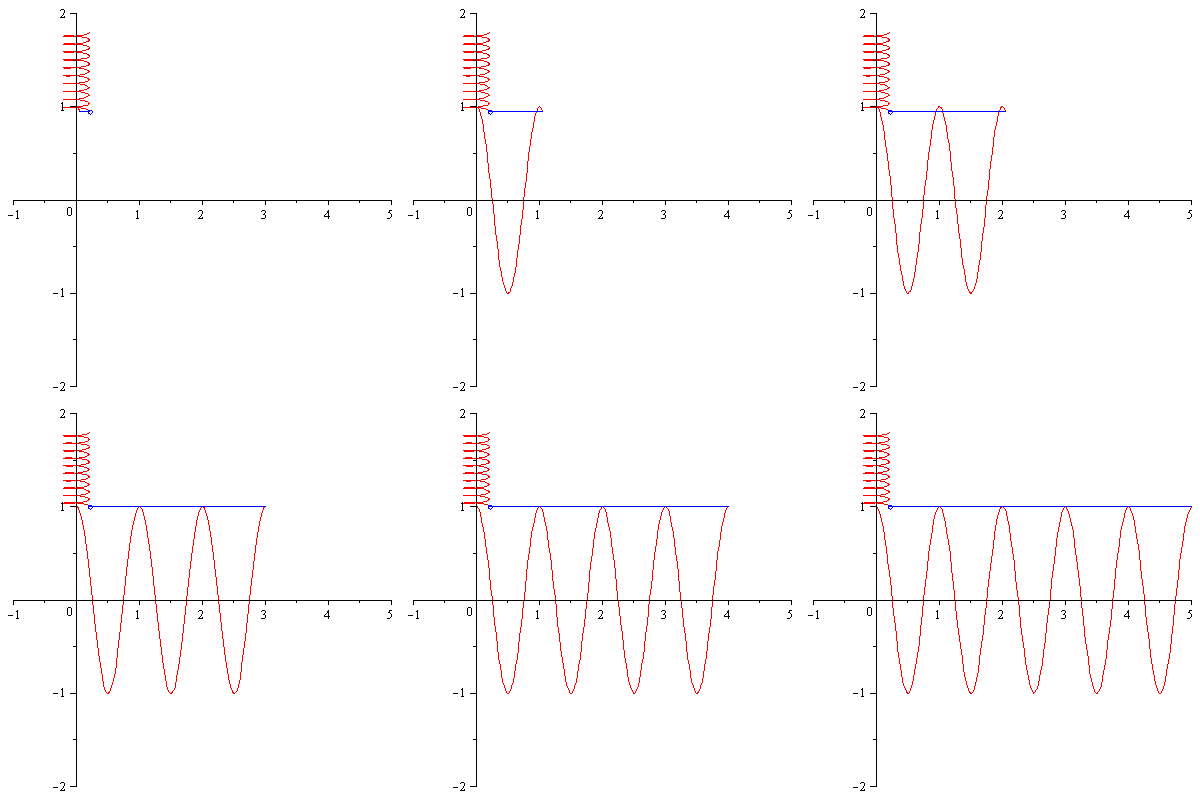
- Computer software and visualization packages give the ability to model
multidimensional systems and show the time evolution of these systems under
a set of physical influences and constraints which can not be obtained
analytically.
- Independent variables and parameters can easily be changed in order to
test hypotheses and determine their influence on a system.
- Translating a physical system into computer code gives students alternative representations and language in which to consider physical systems and test their understanding of the physical approximations needed.
|
 |
Methodology:
- Computer visualization components can be demonstrational, where the instructor
uses a projector to present simulations and graphics to the class as a
whole.
- Computer visualization can be inquiry based, where computers are made available
for students to explore physical systems and their defining equations freely.
- Programs (such as Maple or Mathematica) can be used to write and save a
skeleton activity, where students must go through the code and complete
required information or adapt parameters in order to learn how the program
and system work and to complete the simulation.
- The use of computational representations and/or visulization can compliment
other activities as a check or corroboration of student results.
Effective Use:
- As with all activities, the method of implementing computer visualization
components in a class will be determined by the desired learning outcomes.
- Computer visualization components can compliment all other activities.
- A drawback of computer visualization components is the click-and-play attitude
that students will invariably fall into, whereby they let the reasoning
behind their observations fall to the wayside due to the ease of “just
seeing it”. Because of this, bareones programs that the students have to
agument or modify seem to wrok best.
- Students can become overly dependent upon computer packages and visualization. The purpose of employing computer components in the classroom is to help
students build their own visualization skills based upon exposure to computer
simulations and models, not to build a dependence upon them.
- Increasing the level of rigor in computer visualization components throughout
the course of a student’s education should help in building their visualization
skills and not create a dependence upon computers but develope them as
useful tools in learning and inquiery. For instance, entry level students
are most likely to take a click-and-play approach. As students progress,
they should be weaned off of completed simulations, through skeleton simulations,
to building their own framework and simulations from scratch.
In this progression, students gain important modeling skills while simultaneously building their knowledge of physical systems.
|
Texas A&M University Physics Department
College Station, TX 77843-4242 | (979) 845-7717 | Fax
(979) 845-2590